
WHAT IS FOG ;
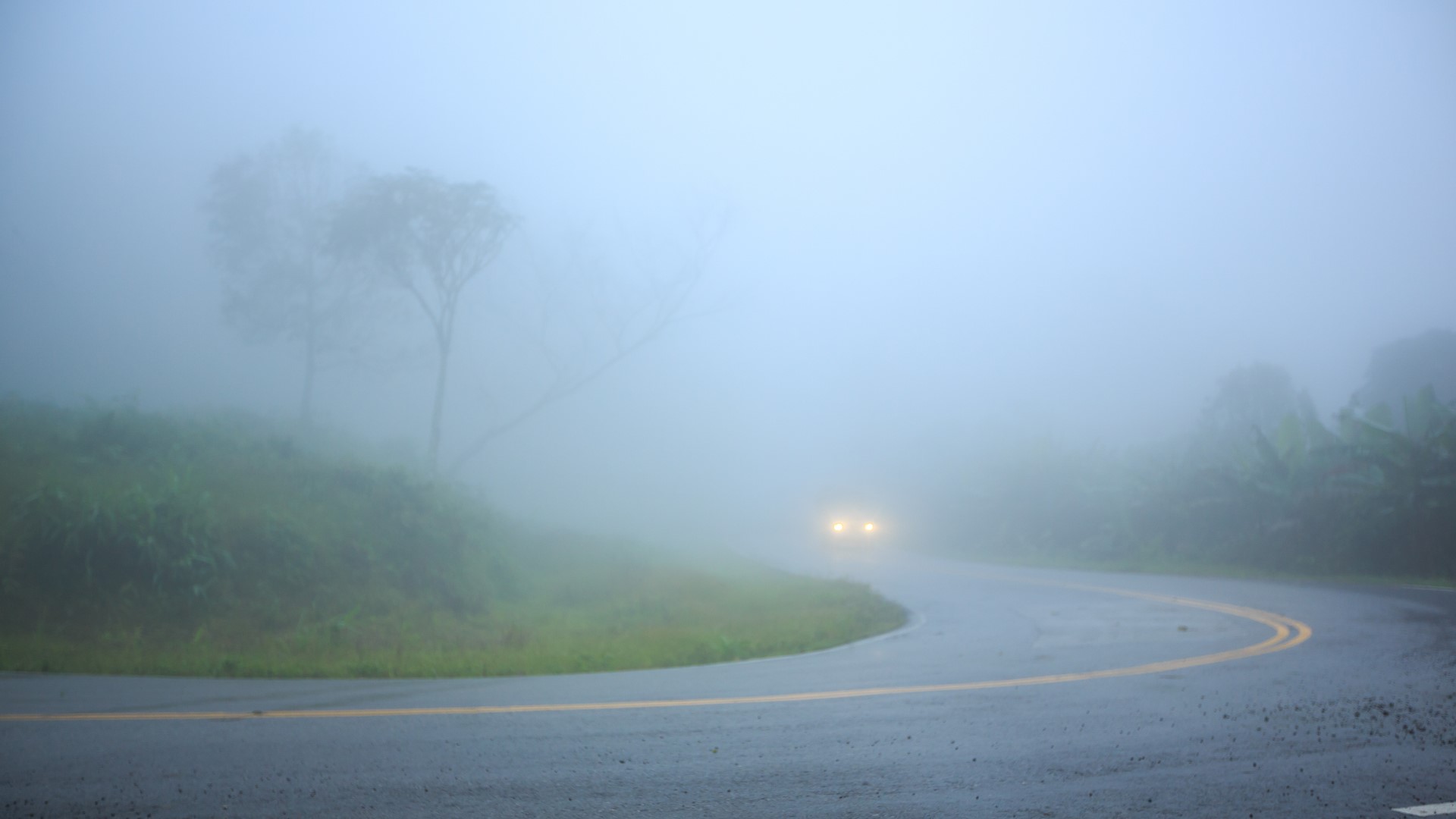
Fog is a weather phenomenon in which minute water droplets or ice crystals remain suspended near the Earth’s surface, reducing horizontal visibility to less than 1 km. It is essentially a cloud at ground level and forms when air becomes saturated either by cooling to the dew point or by addition of moisture.
Conditions for Formation
Fog generally forms under conditions of high relative humidity, light winds, and stable atmospheric conditions. Cooling of air near the surface or contact with a colder surface is crucial for condensation.
Types of Fog
Radiation Fog
Develops on clear, calm nights due to rapid radiational cooling of the ground.
Common in winter over inland plains, especially the Indo-Gangetic plains.
Advection Fog
Occurs when warm, moist air moves horizontally over a colder surface and gets cooled.
Common along coastal regions and over cold ocean currents.
Valley (Upslope) Fog
Forms in valleys where cold, dense air drains downslope and accumulates, leading to temperature inversion.
Frontal Fog
Develops near fronts when rain evaporates into colder air, increasing humidity.
Evaporation (Steam) Fog
Forms when cold air passes over warm water bodies, causing rapid evaporation and condensation.
IMPACT
1. Transportation and Infrastructure
Severely reduces visibility, causing road accidents, especially on highways.
Leads to flight delays, diversions, and cancellations, affecting aviation safety.
Disrupts railway operations, causing delays and economic losses.
Slows port and inland waterway navigation.
2. Economic Impacts
Delays in transportation affect supply chains and trade.
Agricultural marketing suffers due to disrupted logistics.
Increased fuel consumption and operational costs.
3. Agriculture
Reduced sunlight affects photosynthesis, slowing crop growth.
Prolonged fog increases fungal diseases in crops like wheat and vegetables.
However, light fog may reduce evapotranspiration and protect crops from frost.
4. Human Health
Combined with pollutants, fog forms smog, worsening air quality.
Increases respiratory and cardiovascular problems, especially in urban areas.
Causes eye irritation and reduced immunity during prolonged exposure.
5. Urban and Environmental Effects
Enhances temperature inversion, trapping pollutants near the surface.
Reduces solar radiation, affecting solar power generation.
Alters local energy balance and microclimate.
6. Disaster and Safety Concerns
Hampers emergency services and disaster response.
Increases risk during military and strategic operations.
MEASURES
Improved forecasting through Doppler weather radars, satellites, and AI-based nowcasting to provide accurate and timely warnings.
Early warning dissemination using mobile alerts, GPS-based advisories, and coordination with transport agencies.
Transport preparedness: fog-resistant runway lighting, CAT-III ILS at airports, speed regulations on highways, and anti-collision systems in railways.
Urban air pollution control to prevent smog formation by reducing vehicular and industrial emissions.
Agricultural advisories to help farmers manage crop diseases and frost risks during foggy periods.
Public awareness campaigns on road safety and health precautions during dense fog events.
