
What is Eutrophication?
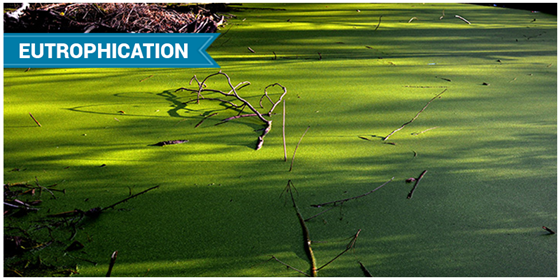
Eutrophication is the process by which a water body (lake, river, pond, or coastal area) becomes over-enriched with nutrients, mainly nitrogen and phosphorus, leading to excessive growth of algae and aquatic plants.

Causes of Eutrophication
1. Agricultural runoff
-
Excess use of chemical fertilizers rich in nitrogen and phosphorus
-
Runoff during rains carries nutrients into nearby water bodies
Examples:
-
Fertilizer runoff into lakes and reservoirs
-
Green Revolution–intensive farming regions
2. Domestic sewage discharge
-
Untreated or partially treated sewage contains high nutrients.
-
Major source in urban and peri-urban areas
Examples:
-
Sewage inflow into rivers, lakes, and urban tanks
3. Industrial effluents
-
Discharge nutrient-rich wastewater
-
Food processing, paper, textile, and fertilizer industries
Examples:
-
Effluents entering rivers and coastal waters.
4. Detergents and household chemicals
-
Phosphate-based detergents add nutrients to water bodies
Examples:
-
Washing activities near rivers and lakes
5. Urban runoff
-
Stormwater carries nutrients from roads, gardens, and waste dumps
Examples:
-
City drains emptying into lakes
6. Aquaculture and livestock waste
-
Fish farms and animal wastes add organic matter and nutrients
Examples:
-
Intensive fish farming in reservoirs
7. Natural causes
-
Weathering of rocks
-
Natural decay of vegetation
Examples:
-
Gradual nutrient accumulation in old lakes
Way Forward to Control Eutrophication
1. Control nutrient input at source
-
Reduce excessive use of chemical fertilizers.
-
Promote balanced fertilization and soil testing.
Examples:
-
Precision farming, organic manure use
2. Improve sewage treatment
-
Ensure 100% treatment of urban and rural sewage
-
Upgrade STPs for nutrient (N & P) removal
Examples:
-
Tertiary treatment, constructed wetlands
3. Regulate industrial discharge
-
Strict enforcement of effluent standards
-
Zero liquid discharge where feasible
Examples:
-
Continuous effluent monitoring systems
4. Eco-friendly detergents
-
Ban or limit phosphate-based detergents
-
Promote biodegradable alternatives
Examples:
-
Low-phosphate household cleaners
5. Watershed and buffer management
-
Create vegetative buffer strips along water bodies
-
Prevent direct runoff entry
Examples:
-
Riparian vegetation belts
6. Lake and wetland restoration
-
Desilting, aeration, bioremediation
-
Revival of natural wetlands as nutrient sinks
Examples:
-
Artificial aerators, floating wetlands
7. Policy, awareness, and monitoring
-
Integrated lake basin management
-
Public awareness and community participation
-
Regular water quality monitoring
